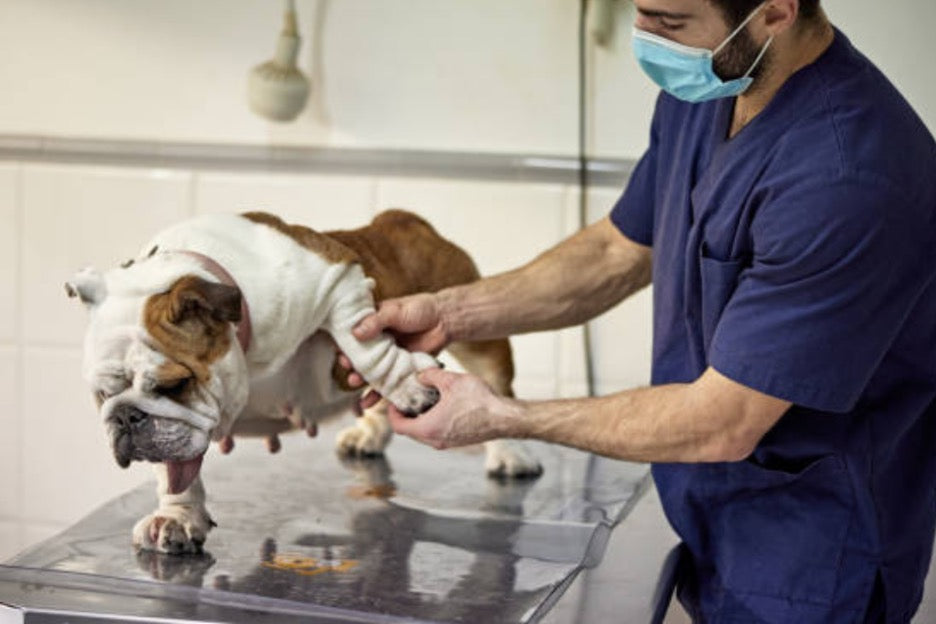

Max is a 12-year-old Yorkie-Chihuahua mix who weighs just 4.4 pounds. Like many toy-breed dogs, he developed a luxating patella — a kneecap that slips out of its normal groove. His owner watched him limp, skip steps, and slow down.
Three weeks after starting home laser therapy with a Domer Laser, on the recommendation of their vet, his owner Gisela shared an update with our community: Max is "running, playing, and walking, like never before."
So what exactly happened in Max's knee — and why does this condition hit tiny dogs like him so often?
What Is a Luxating Patella in Dogs?
The patella is your dog's kneecap. In a healthy knee, it glides up and down inside a groove at the end of the femur (the trochlear groove) every time the leg bends. "Luxating" simply means dislocating — so a dog luxating patella is a kneecap that pops out of that groove, usually toward the inside of the leg (medial luxation).
Veterinarians grade the condition from 1 to 4:
- Grade 1: The kneecap can be pushed out manually but snaps right back on its own.
- Grade 2: The kneecap pops out on its own during movement, then returns. This is the classic "skip a step, shake the leg, keep walking" stage.
- Grade 3: The kneecap is out most of the time but can still be pushed back in.
- Grade 4: The kneecap is permanently out of the groove and cannot be repositioned.
Which dogs are most at risk?
Luxating patella is overwhelmingly a small-breed condition. Yorkshire Terriers, Chihuahuas, Pomeranians, Toy Poodles, Maltese, and their mixes are the most commonly affected. Most cases are congenital or developmental: a shallow groove, mild limb misalignment, or soft-tissue imbalance the dog is born with. Trauma can cause it too, but genetics is the usual driver, and a large share of affected dogs have it in both knees.
Signs your dog's kneecap may be luxating
- A sudden skipping or hopping gait — running on three legs for a few strides, then back to normal
- Stretching or shaking the back leg out to "reset" the knee
- Intermittent limping that comes and goes
- Reluctance to jump on the couch or climb stairs
- In older dogs, stiffness from arthritis developing in the knee
If you're seeing these signs, the first step is a veterinary exam. Only your vet can grade the luxation and rule out other issues like a cruciate ligament tear.
How Is a Dog Luxating Patella Treated?
Treatment depends on the grade and how much the condition affects your dog's life:
- Surgery is typically recommended for grade 3–4 luxations, or lower grades with persistent lameness. Procedures deepen the groove or realign the attachment of the patellar tendon.
- Conservative management is common for grade 1–2: weight control, controlled exercise, muscle-building, joint supplements, anti-inflammatory support — and increasingly, laser therapy for dogs.
For a tiny senior like Max, anesthesia and surgery carry real risks. That's exactly the kind of patient where vets look for effective non-invasive options first — and why his vet suggested a home laser therapy device.
How Does Laser Therapy for Dogs Help a Luxating Patella?
Laser therapy for dogs — also called cold laser therapy, low-level laser therapy (LLLT), or photobiomodulation — uses specific laser wavelengths that are absorbed by cells, where they trigger biological responses that support the body's own repair processes.
For a knee condition, that matters in three ways:
- 🔵 Less inflammation. Every time the kneecap slips, it irritates the joint capsule and surrounding soft tissue. Laser energy helps calm that inflammatory response.
- 🔵 Pain relief without daily medication. Important for small, older dogs whose livers and kidneys don't always tolerate long-term drugs well.
- 🔵 Soft-tissue and joint support. Laser therapy supports circulation and cellular energy production (ATP) in the muscles, tendons, and ligaments that stabilize the kneecap.
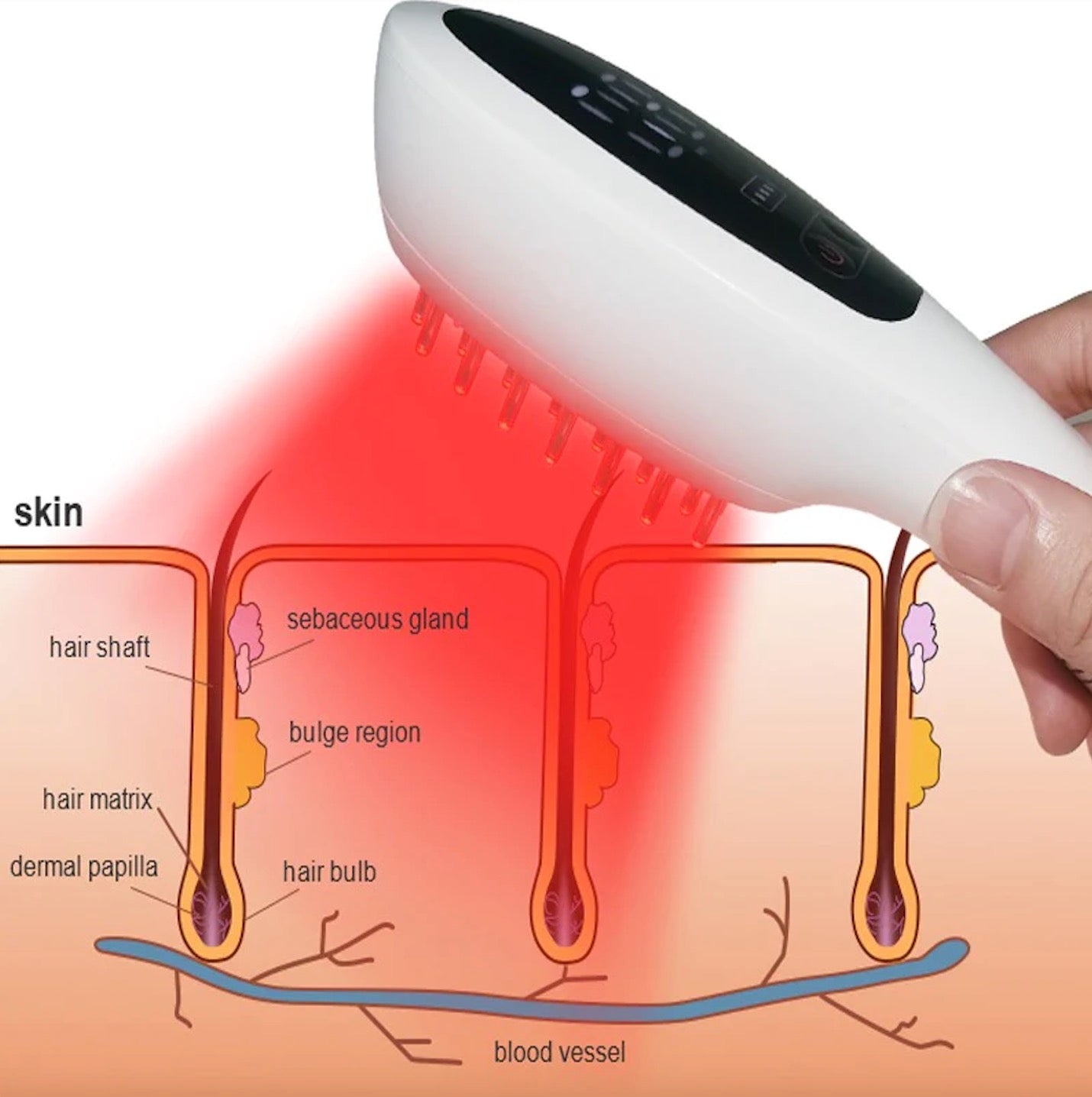
Wavelength determines depth. The Domer 1300mW Handheld Laser Max used combines two true laser wavelengths: 650nm diodes that work at the skin surface to support local circulation, and 808nm diodes that reach roughly 3–5 cm below the skin — deep enough to reach the muscles, tendons, and joint structures around a small dog's knee. This is a genuine GaAlAs Class 3B laser, not an LED gadget; that distinction is the difference between energy that reaches the joint and a glow that stays on the fur.
And this isn't just owner anecdote. In a double-blinded, placebo-controlled veterinary trial, dogs with elbow osteoarthritis who received photobiomodulation showed significantly improved lameness scores, and most were able to reduce their anti-inflammatory medication (Looney et al., 2018: https://pmc.ncbi.nlm.nih.gov/articles/PMC6091142/). You can browse more peer-reviewed studies on our research page: https://healthcaremarts.com/pages/research
Max's Domer Laser Review: The 3-Week Timeline
Here's what Gisela reported, in her own account — along with two photos of Max mid-session:

Max, all 4.4 pounds of him, standing calmly on a towel while the handheld laser works on his hind leg.
- 🐾 The plan: Vet-recommended home sessions with the Domer 1300mW Handheld Laser, with support from our Facebook community. Her vet set the schedule for those first weeks — the right starting protocol differs for every dog, so that conversation is step one.
- 🐾 Week 3: Full improvement — back to normal activity, as if nothing had ever happened
- 🐾 Now: Maintenance mode — short 5-minute sessions once or twice a week to keep him comfortable

Goggles on, cone on — Max knows what comes next.
One detail says more than any photo: when Max sees the Domer, his cone, and his protective glasses come out, he gets up from his bed and walks over on his own. Dogs don't volunteer for things that hurt. Sessions are painless — many dogs visibly relax, and some even fall asleep during therapy.
Her message ended simply: thank you, thank you, thank you — to the vet who recommended it and the community that supported her.
Important: This is one owner's experience, and results vary. Gisela's post didn't mention Max's luxation grade, so before comparing your dog's situation to his, ask your vet where your dog falls on the 1–4 scale. Session length, frequency, and whether laser therapy is appropriate for your dog should be decided with your veterinarian. (Every Domer Laser ships with condition-specific therapy protocols for pets and people that you can review together with your vet.)
FAQ: Laser Therapy for Dog Luxating Patella
Can laser therapy fix a luxating patella? No — it cannot deepen a shallow trochlear groove or straighten a misaligned limb, so it doesn't change the anatomy that lets the kneecap slip. What it does is manage the consequences: inflammation, pain, and soft-tissue strain. For milder grades, and for dogs who aren't surgical candidates, that can be the difference between limping and living normally.
Is laser therapy for dogs safe for small and senior breeds? Yes, when used correctly — it's non-invasive and drug-free, a key reason vets suggest it for fragile patients. Protective eyewear should be worn by both you and your dog, and areas like tumors or the growth plates of puppies should be avoided.
How long until I see results? It varies by dog and severity. Laser therapy is cumulative — effects build session by session, so consistency matters more than intensity. Some dogs respond within weeks; others need longer or ongoing maintenance.
Can I do laser therapy at home instead of at the clinic? In-clinic laser sessions in the US typically run $40–$100 each, and knee conditions need repeated visits. A home Class 3B device lets you treat consistently on your own schedule — many owners use laser therapy for dogs at home as a continuation of vet-guided care, and it often pays for itself within the first course of treatment. The Domer handheld also comes with a 30-day money-back trial and 100+ verified owner reviews, so trying it is low-risk.
What's the difference between a real laser and an LED device? Many cheap "therapy lights" sold online are LED devices. LEDs scatter energy at the surface; a true laser delivers coherent, focused wavelengths that penetrate to the deeper tissue around joints. For a knee problem, depth is the whole point.
The Takeaway
A luxating patella doesn't have to mean the end of stairs, walks, and zoomies — even for a senior toy breed. Talk to your vet about where your dog's condition falls, and ask whether laser therapy for dogs belongs in the plan. For Max, it gave him his normal life back.
👉 See the device Max's owner used: https://healthcaremarts.com/products/laser-treatment-for-vets
👉 Read more real Domer Laser reviews: https://healthcaremarts.com/pages/domer-laser-reviews
👉 Have questions about your own dog? Join our Domer Laser Facebook Group and ask owners who've been through it: https://www.facebook.com/DomerLaserreview/
Disclaimer: This article shares an individual customer's experience and general educational information. It is not veterinary advice. Always consult your veterinarian for diagnosis and before beginning any treatment.