
Max is a 12-year-old, 4.4-pound Yorkie and Chihuahua mix who was limping on a back leg and skipping every few steps because of a luxating patella. His owner, Gisela, treated the knee at home with the Domer 1300mW handheld cold laser, once a day for 15 minutes. After three weeks he was running, playing, and walking normally again, and she summed it up in one line: "It's almost like nothing ever happened to him." This Domer Laser review walks through what Max was like before, exactly how the sessions were done, what changed, and what his case can tell you about laser therapy for dogs with knee problems.
Case Snapshot
- Patient: Max, 12-year-old Yorkie/Chihuahua mix, 4.4 pounds
- Before: Luxating patella; limping on a hind leg and hopping with the leg held up
- Device: Domer 1300mW handheld cold laser (650nm + 808nm)
- Routine: Once daily, 15 minutes, for three weeks
- After: Running, playing, and walking normally at three weeks; now on maintenance once or twice a week for 5 minutes
- Owner's verdict: Thankful, and describes Max as back to normal
What Is a Luxating Patella in Dogs?
A luxating patella is a kneecap that slips out of place. In a healthy knee, the kneecap rides in a groove at the bottom of the thigh bone and glides up and down as the leg bends. In a dog with a luxating patella, the kneecap pops out of that groove, usually toward the inside of the leg, and for a moment the knee stops working the way it should. It is one of the most common orthopedic problems in small dogs. Yorkshire Terriers and Chihuahuas are both among the breeds that get it most often, which makes a Yorkie and Chihuahua mix like Max a textbook patient.
The sign owners notice first is a skip. The dog trots along normally, suddenly carries one back leg for a few steps, then puts it down and carries on as if nothing had happened. That is the kneecap slipping out and dropping back in. Vets grade the condition from 1 to 4: in the lower grades the kneecap slips now and then and returns on its own, and in the higher grades it sits out of place most or all of the time. Mild cases are often managed without surgery, through weight control, sensible exercise, and treatment for pain and inflammation, while severe cases are usually surgical. Which group your dog belongs to is a question for your vet, and it should be answered before you start laser therapy for dogs or any other treatment at home.
Max Before Treatment: A Limp and a Skipping Back Leg
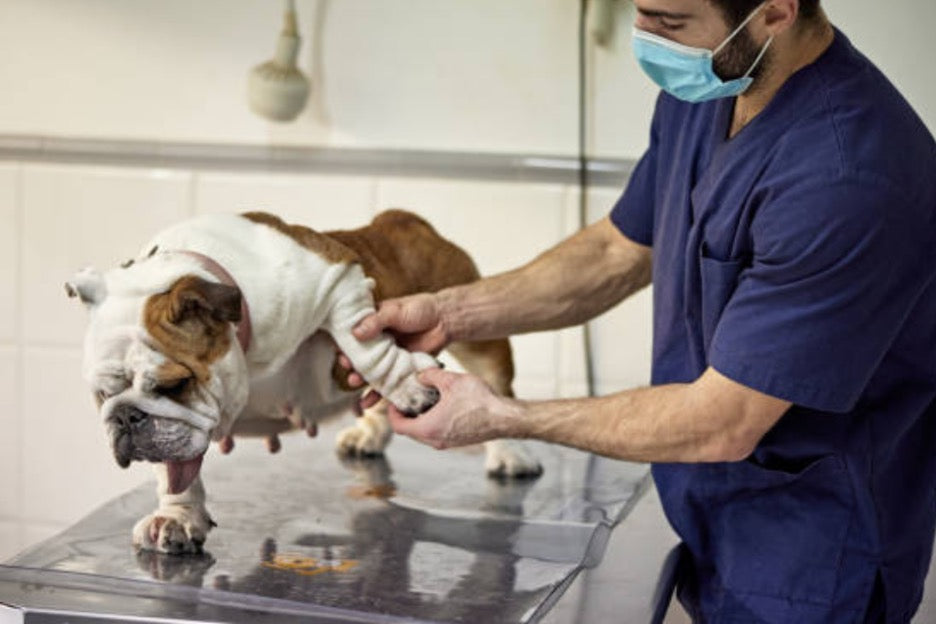
Max had the classic picture. He was limping on a hind leg, and every so often he would lift it and hop along on three legs before setting it down again. In a dog of 4.4 pounds there is very little muscle around the knee to hold things steady, and at 12 years old he did not have youth on his side either. A senior dog who stops running and playing loses strength quickly, and a weaker leg supports the knee even less, so a problem like this tends to feed itself.
Gisela did not try to solve it alone. Her vet was involved from the start, and it was the vet, together with the people in our Facebook group, who recommended laser therapy for dogs as something she could do for Max at home. That order of events is worth copying: a professional opinion first, then a plan you can carry out yourself.
How Max's Owner Used Laser Therapy for Dogs at Home
Gisela used the Domer 1300mW handheld cold laser once a day, 15 minutes per session, for three weeks. The setup in her photos is simple and easy to repeat. Max stands on a folded towel on the dining table, which brings his knee up to a comfortable working height and gives his feet something soft that does not slide. One of her hands rests on his back to keep him steady, and the other holds the laser against his back leg at the knee.
Each session follows the same three steps:
- Put the soft cone on Max and put on the protective glasses.
- Power on the laser and set the timer to 15 minutes.
- Hold the treatment head at the knee of the affected hind leg until the timer ends.
The cone is a detail worth borrowing. It is the padded kind dogs wear after surgery, and here it does a different job: it keeps Max from turning his head to look at the laser, so his eyes stay protected without anyone having to hold his face. Gisela wears the protective glasses that come with the device. Once the three weeks were up she moved Max to what she calls maintenance mode, which is once or twice a week for 5 minutes at a time.
What Changed After Three Weeks
Gisela describes the result as full improvement and back to normal after just three weeks. Max is running, playing, and walking, in her words, like never before. The limp is gone and so is the skipping step. For a 12-year-old dog, getting back the wish to run and play is as meaningful as the gait itself, because it tells you the leg no longer bothers him enough to hold him back.
Another change showed up along the way, and it is our favorite detail in her story. Whenever Max saw the Domer, his cone, and the glasses come out, he got out of his bed and walked over to her on his own. He knew it was therapy time. Gisela took that as his way of telling her it was working, and it is hard to argue with a dog who volunteers.
What Is Cold Laser Therapy?
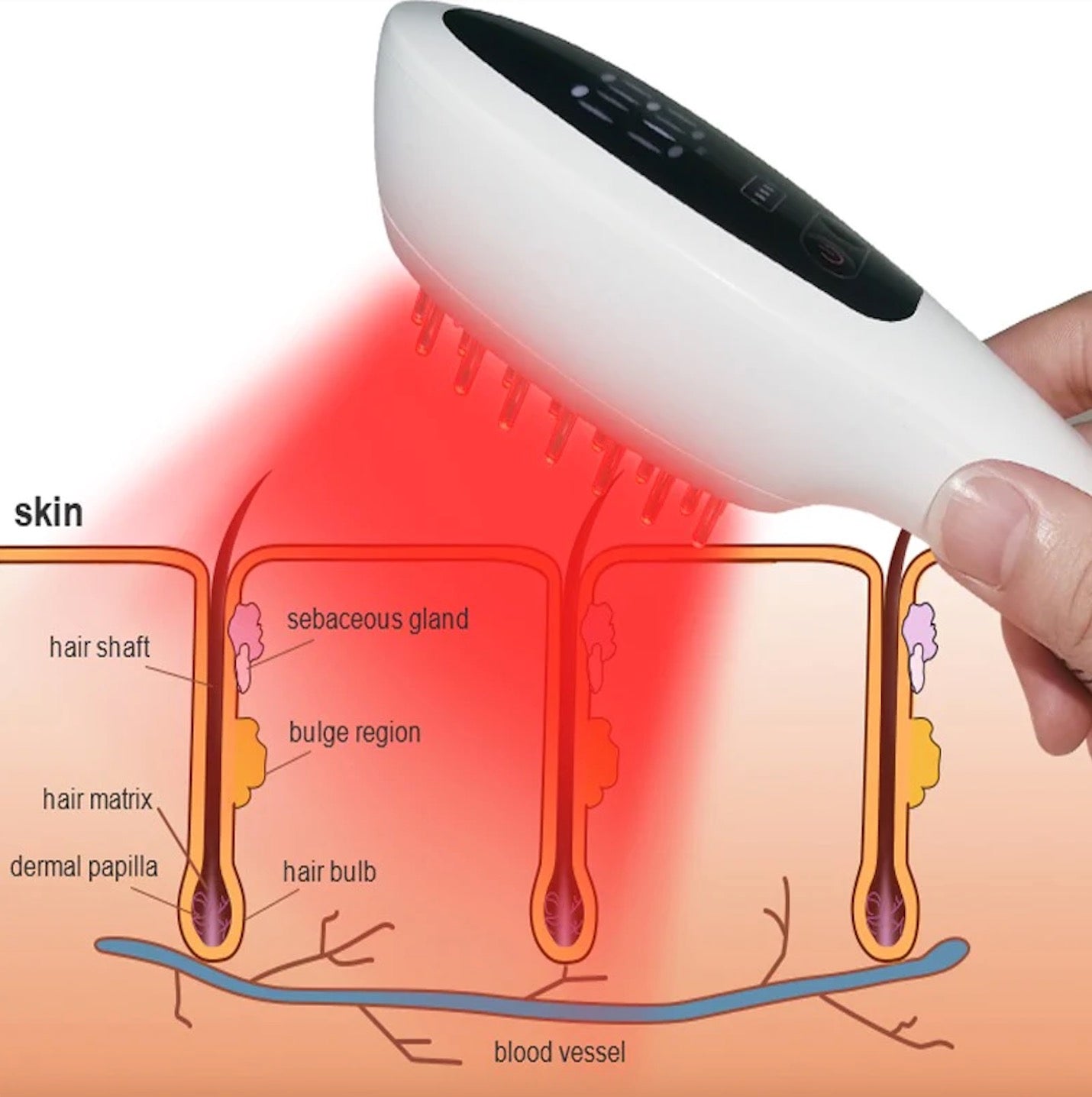
Cold laser therapy is a treatment that uses low-intensity laser light to help injured or inflamed tissue recover. It is also called low level laser therapy (LLLT) or photobiomodulation laser therapy, and it is what vets mean when they talk about laser therapy for dogs with joint pain, soft-tissue injuries, or wounds that are slow to heal. The laser light is absorbed by light-sensitive structures inside the cell, which sets off a series of photochemical changes, including increased production of ATP, the cell's energy currency. It is called cold because it does not heat the tissue, and that is why it can be used safely on a joint as small as Max's knee.
Does Laser Therapy Help a Dog With a Luxating Patella?
It helps to be clear about what the laser does and what it does not do. Cold laser therapy does not push a kneecap back into its groove, and it does not change the shape of the bones. What it works on is everything around the joint: the soft tissue that gets strained each time the kneecap slips, the inflammation that follows, and the pain that makes a dog limp and stop using the leg. When the knee hurts less, a dog moves more, and movement is what keeps the muscles that steady the knee strong.
That is why laser therapy for dogs with a luxating patella may serve as one part of a wider treatment plan, helping relieve pain and support tissue recovery and rehabilitation. How far a dog improves depends on the grade of the luxation, how long it has been going on, the dog's age and weight, and the overall plan from your vet. Max's result is his own. A dog with a higher grade may still need surgery, and that decision belongs to your vet.
Why Cold Laser Therapy at Home Suits a Small Senior Dog
Cold laser therapy does not work in a day. The effect builds up, session after session, which means the routine matters as much as the device. Max had a session every day for three weeks, and that kind of frequency is hard to get any other way. Twenty-one trips to a clinic would be stressful for a tiny senior dog and difficult for most owners to keep up. At home, the session happened on the same table, on the same towel, with the same person, until it was simply part of his day.
The maintenance phase follows the same logic. Once Max was moving normally, Gisela did not stop; she cut back to a lighter schedule to keep the knee comfortable. If you are starting out, plan for both phases: a consistent daily stretch at the beginning, and a shorter, less frequent routine once your dog is doing well.
Does Laser Therapy for Dogs Hurt?
No. Cold laser therapy should not hurt a dog. There is no heat building up on the skin, no vibration, and no sound, and most dogs stand or lie quietly through a session. Max is the best evidence here, because a dog who found the sessions unpleasant would not leave his bed and walk toward the equipment. Gisela says he had no problem doing the therapy at any point.
The one strict rule is to protect the eyes. Laser light must never reach your dog's eyes or yours, which is the reason for Max's cone and Gisela's glasses. Beyond that, watch your dog. If he pulls the leg away, flinches at one spot, or keeps trying to leave, stop and try again later, and tell your vet if it keeps happening in the same place. Check with your vet before you start if your dog has a known or suspected tumor near the area, is pregnant, or has not yet had the leg examined.
Why the Domer 1300mW Handheld Cold Laser Fits a 4.4-Pound Dog
The Domer 1300mW handheld cold laser is a two-wavelength unit that combines ten 650nm diodes at 5mW each with five 808nm diodes at 250mW each in a single treatment head. The two wavelengths work at different depths. The 650nm output is absorbed close to the surface, in the skin and the tissue just beneath it, while the 808nm output is built to reach further down, into the muscle and the tissue around the joint. A knee needs both.
Several things make it practical for laser therapy for dogs as small as Max. It is handheld and cordless, so the device goes to the dog and a small knee is easy to reach. The timer adjusts from 15 to 60 minutes in five-minute steps. It has three power levels and both continuous and pulsed output, so it can be turned down for a very small or sensitive dog. And it ships ready to use, with two pairs of protective glasses, an English manual, US and EU charging equipment, and PDF treatment protocols, backed by a one-year warranty and lifetime customer support.
Domer Laser Review: What Max's Owner Says
Gisela's post in our Facebook group opens with the word thankful, and the rest of it reads the same way. She is happy to report that Max is running, playing, and walking again. She thanks the group's admins and the vet who recommended the laser, and says she cannot thank them enough. Her message ends with three thank-yous in a row.
What comes through most is relief. Twelve is old for a small dog, and an owner watching a senior pet limp tends to assume the slowdown is permanent. Three weeks later she was watching him run. She also noticed how willingly he took part, and she counts that as part of the result: the therapy was something Max accepted from the first session and then came to expect.
Laser Therapy for Dogs Works Best as a Routine
Max's story is a simple one: a vet's recommendation, a towel on the dining table, and fifteen minutes a day. If your dog is skipping on a back leg, start with your vet, find out what grade you are dealing with, and ask whether laser therapy for dogs belongs in the plan.
- See the Domer 1300mW Handheld Cold Laser
- Read more customer reviews
- Join the Domer Laser Facebook group
Individual results vary. This article shares one owner's experience and is not veterinary advice. Have your dog examined by a vet before starting any treatment.